A strength log that won't flatter you.
A workout log for lifters who already train, built for iPhone. I did the research, the brand, the design system and every screen, then directed the build. It's live on the App Store.
See it on the App Store ↗Research with four lifters, brand, the OBSIDIAN design system, every screen, and directing the build with AI dev tools.
No design team. Four lifters shaped the direction.
Build for people who already train.
RejectedThe category's default engine: streaks, badges, a social feed.
All four lifters I interviewed already tracked their training, and they told me reps in reserve decide a set. What they lacked was proof the work was working. Motivation tools solve a problem they don't have.
Reps in reserve on every set. Progress shown honestly.
The max estimate is adjusted for effort, so an easy day never gets dressed up as progress. Stall detection, muscle balance and rep-range records all answer to that one line.
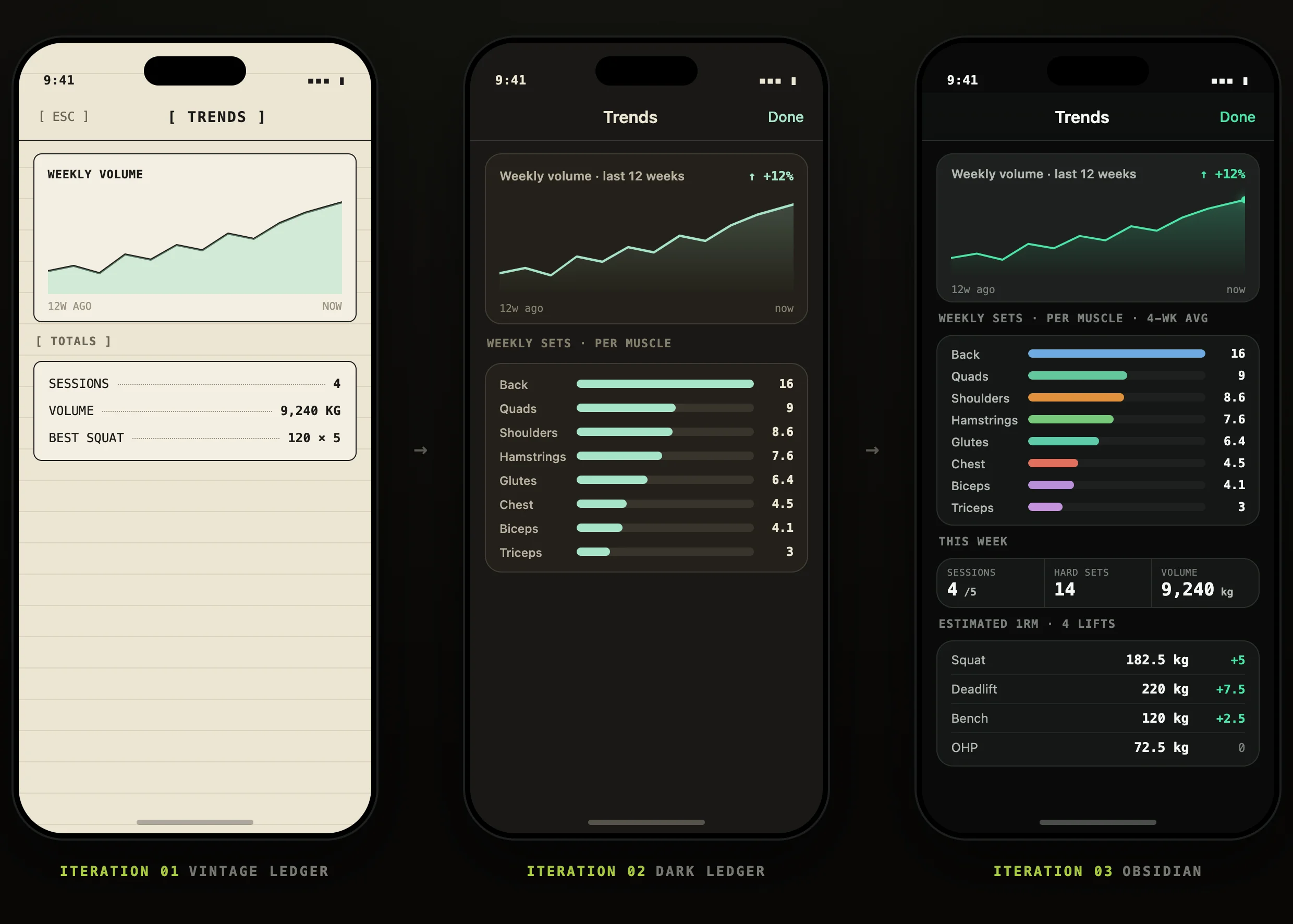
Ship by subtraction.
RejectedA full exercise library and every feature I was excited about at launch.
The library shrank to the lifts a serious program actually uses, and the rest moved to after launch. Retention is the launch metric.
I built a streak counter, liked it, and killed it. A streak is the exact game NotchLift exists to end.
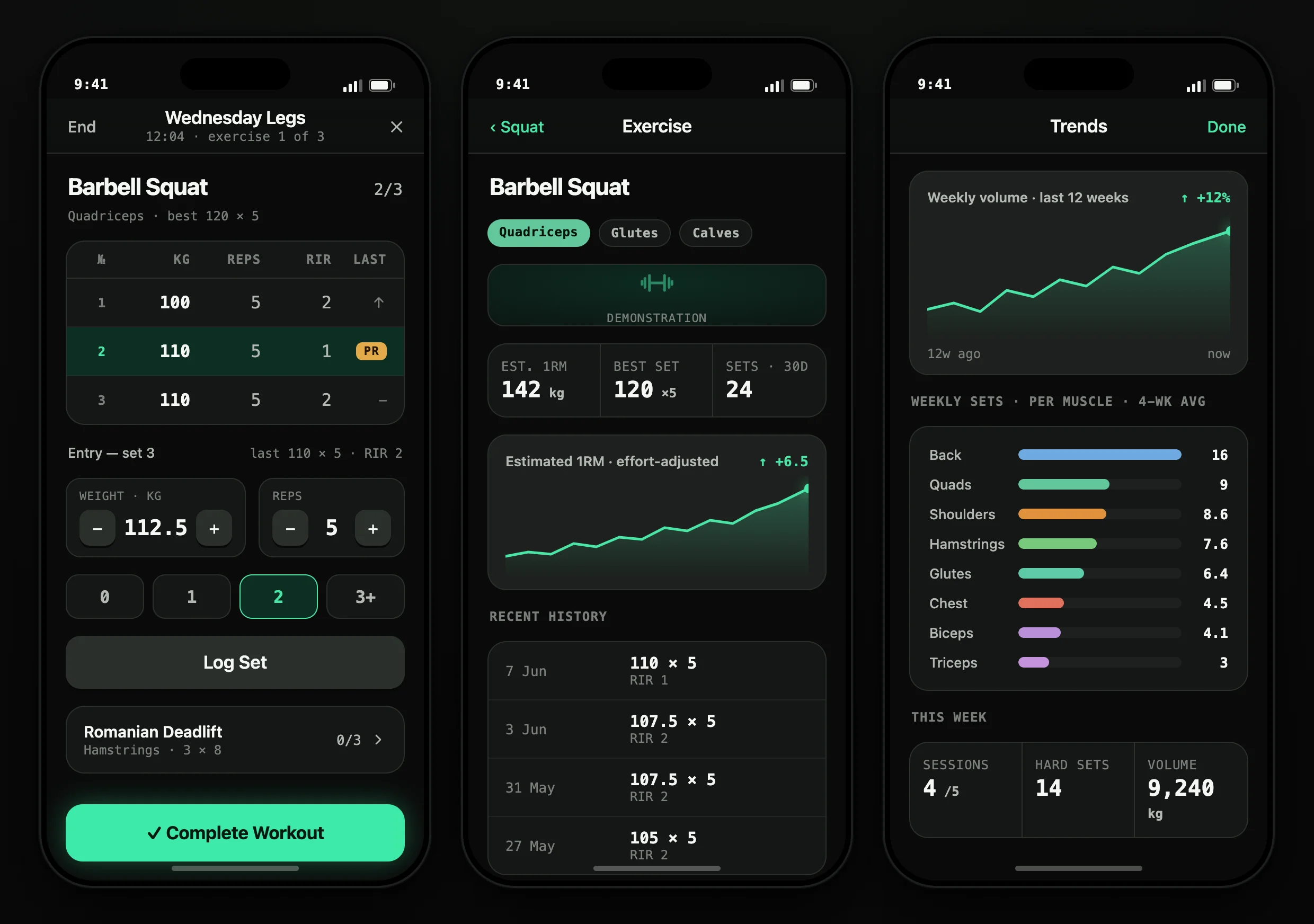
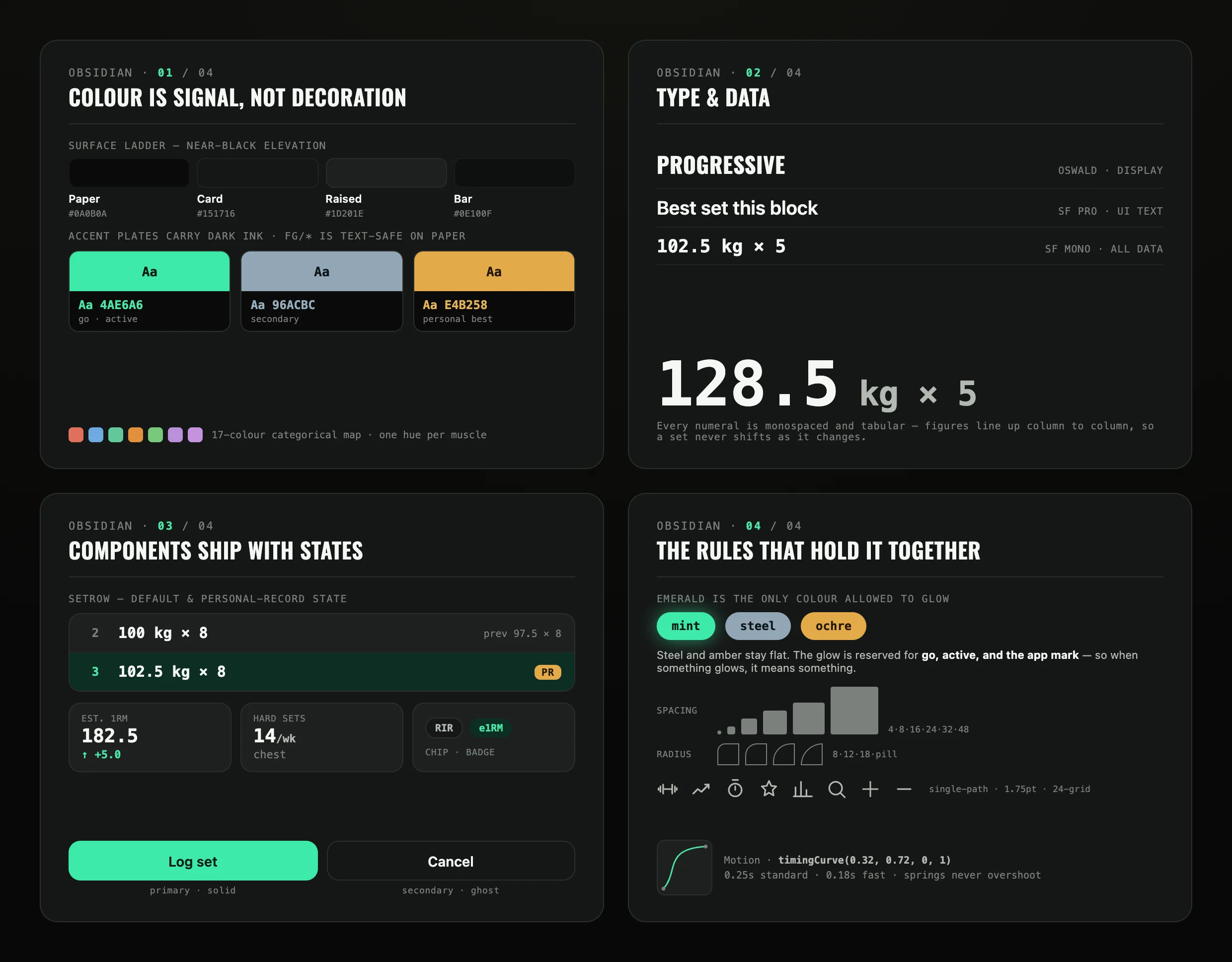
I directed Claude Code and Cursor through the build: 87 SwiftUI views on one token source, a 20-component primitive library and 30 chart components. What I designed is what shipped.